
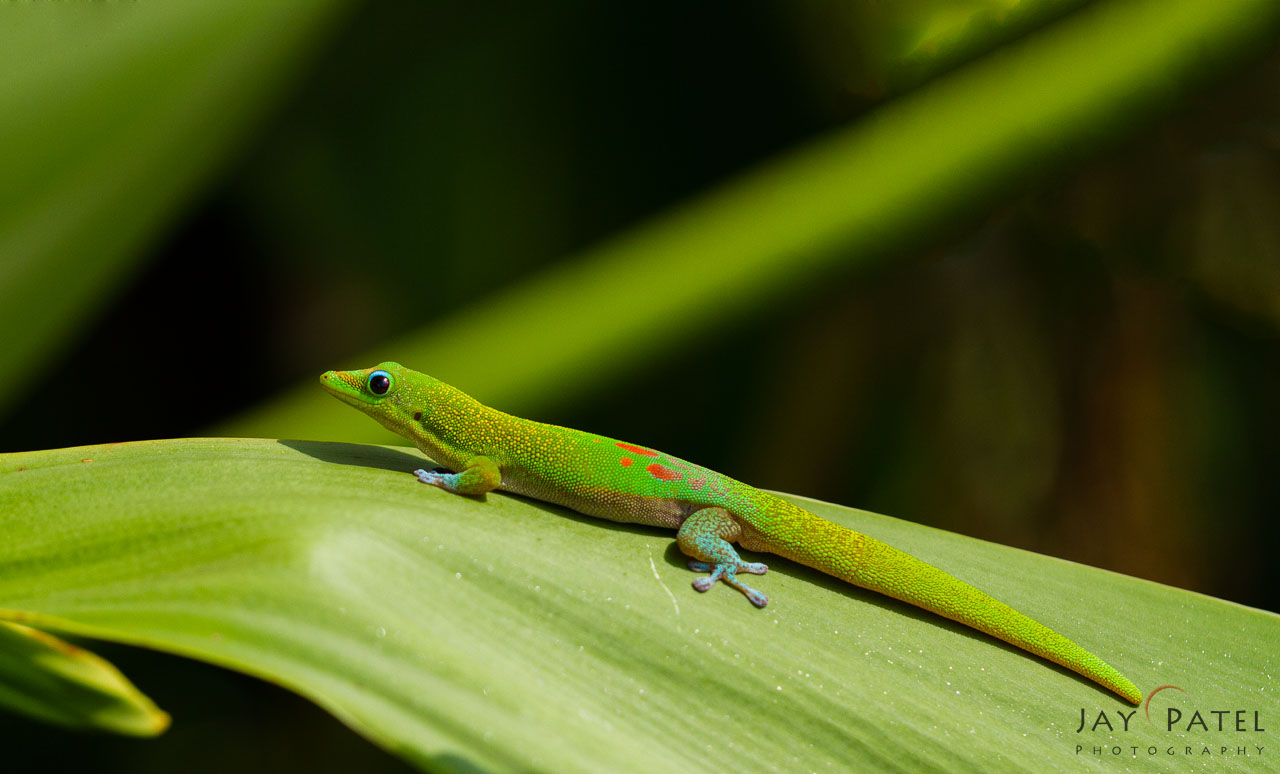
First, let’s clarify the definition of negative space. This refers to the area around your subject. For example, in the macro photograph below, the gecko is the subject and the area around the gecko is the negative space.

All about negative space in Big Island, Hawaii, USA
As photographers, we are trained to pay the utmost attention to our subject. But we sometimes forget to consider the negative space when we’re shooting. To further complicate things, sometimes our macro photography subject is a moving target… like this gecko. Because the subject is moving, the negative space changes every so often.
This makes it especially difficult to pay attention to the negative space AND correctly frame the subject. Here are a couple of unwanted elements that can be easily introduced in the negative space of a macro subject.
Background Distractions
These types of distractions for a living macro photography subject are fairly common. They go in and out of your frame based on where the subject is going and the direction you are trying to photograph. More often than not, a living subject will disappear if you get too close. So, unlike a lifeless macro photography subject which can be easily moved to optimize moving negative space, optimizing negative space for living subject is a challenge in macro photography.
The first macro photo below was my initial attempt to photograph this beautiful gecko. This photo is plagued with a cluttered background of leaves and stems. With a photograph like this, you may be able to crop and dodge or crop and clone to get rid of the distractions in the negative space (such as in the second photo); but even with these techniques, distracting elements sometimes remain.
-

First attempt: Cluttered negative space, Big Island, Hawaii (HI), USA
-

First attempt: After cloning and cropping, Big Island, Hawaii (HI), USA

Competing Textures
A second type of unwanted elements that can creep into your macro photography are unwanted textures around or near your subject. Small living subjects like to hang around environments that offer some camouflage to protect them from predators. For this reason, their colors and textures may blend into the colors and textures of the negative space.
This little gecko in Hawaii (in the following photo) moved close to the tip of the leaf and flattened himself out as he saw me approach. He was very hard to find and when I did find him, I found that the texture and the colors of the leaf were so intense that they competed with the colors and textures of the gecko. Because of this, the subject lost its appeal.

Second Attempt: Competing Textures
Although the tree in the previous photo has a uniform background, the gecko wasn’t positioned correctly. When I tried to move the camera to make the tree more of a straight background, the gecko moved. They’re very skittish that way.
Sometimes the negative space may contain textures and colors that complement your subject or, at best, are not distracting. Here are a few macro photography examples where the textures and colors in the negative space are do not directly compete with the subject.
-

Crab at Sunset Beach, Mana Island, Fiji
-

Negative space with textures – Hawaiian Gecko, Big Island, Hawaii

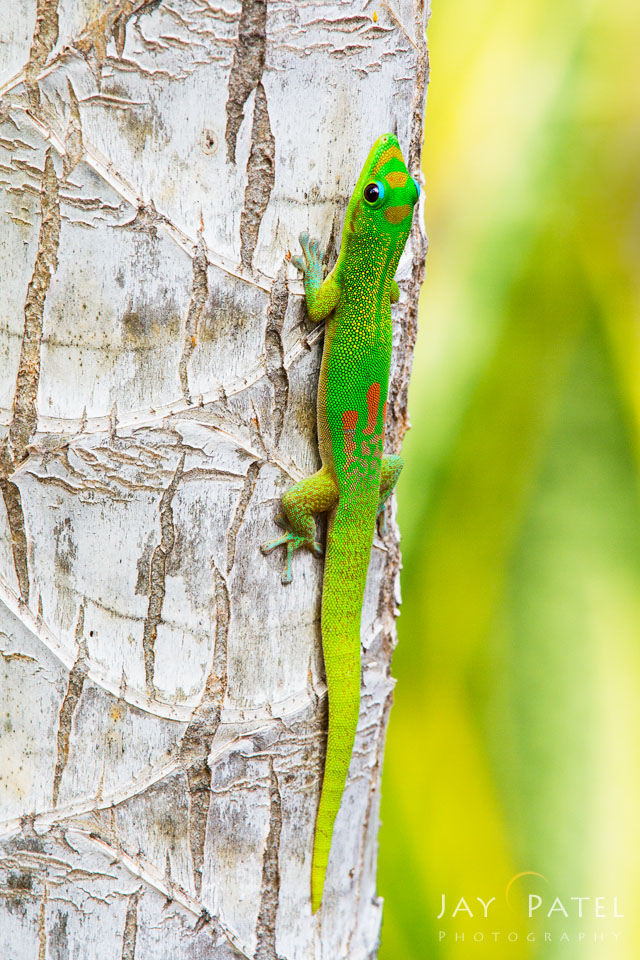
In the photo of the crab above, the water bubbles that make up the negative space does not take away from the subject because the subject has different size and colors. Similarly, the textures and colors in the tree do not distract the Hawaiian gecko from standing out against its background.
To create an effective macro image, you must find a negative space that does not distract the viewers from your subject. The following sections offer some tips on how to pay attention and minimize distractions caused by negative space.
Use a Narrow Depth of Field
This is one of the most effective techniques to create a clean negative space in macro photography. Because you are close to your subject, your depth of field is quite narrow. Using a wide aperture and getting close to your subject allows you to create a buttery smooth background against which your subject can stand out. This is shown in the following examples.
-

Soft background using narrow DOF, Big Island, Hawaii (HI), USA
-

Shallow DOF created by getting close to your subject, Maui, Hawaii (HI), USA


Use a Uniform Background
This is not always easy to achieve because living macro photography subjects are in constant motion. This technique relies on luck and composition rather then pure camera settings. Here are few examples where I was able to capture the textures and details with the uniform negative space around the subject.
-

Back-lit snail at Makena Bay, Maui, Hawaii (HI), USA
-

Gecko on a uniform negative space, Big Island, Hawaii (HI), USA

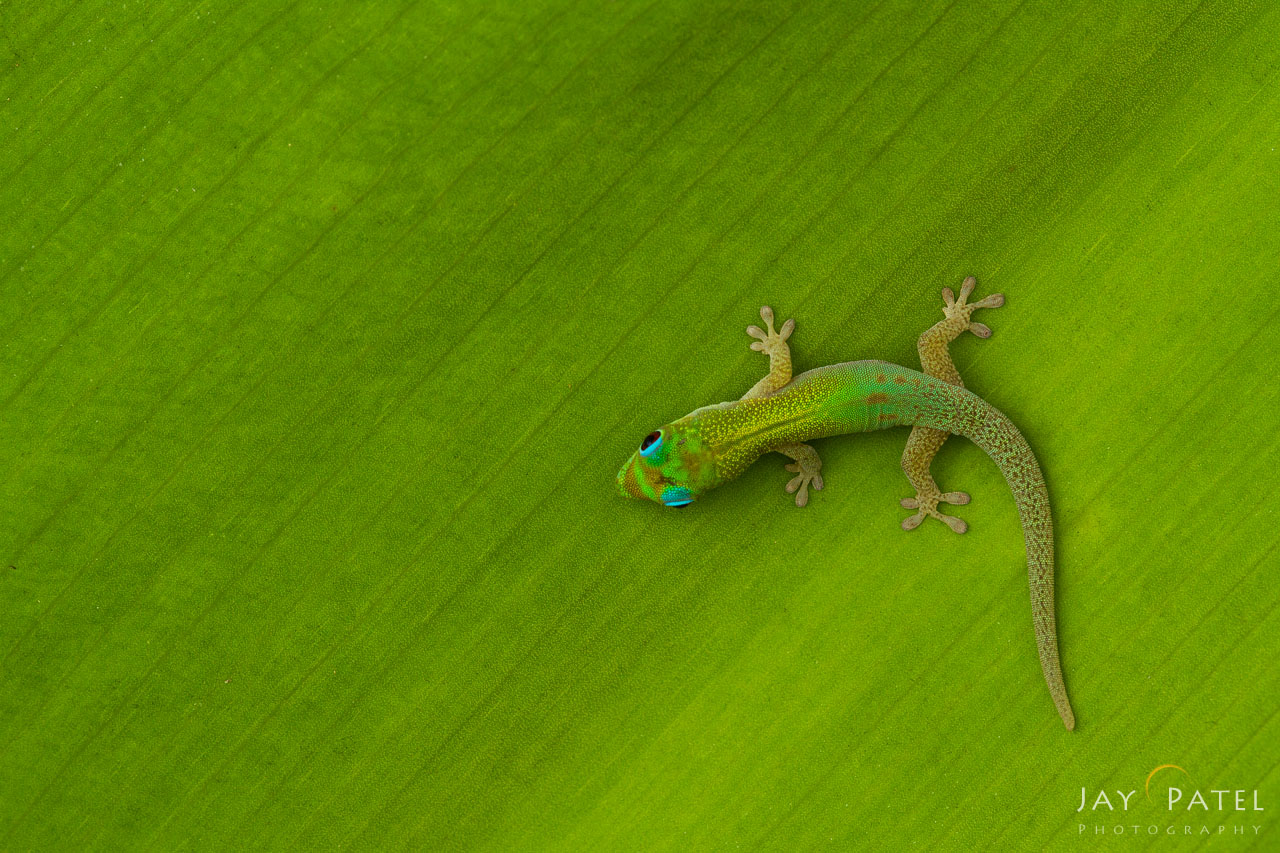
In the image of Hawaiian gecko above, the background isn’t blurred at all. You can clearly see its details. But, even with the same color and texture, the gecko stands out. The size of the gecko is different than the size of the leaf’s texture which allows the gecko to not get lost in its background. Similarly the back-lit snail stood out from its background due to its size and colors.
Both of these techniques help to minimize the distractions caused by negative space. What other techniques do you use to control your negative space? Please feel free to leave comments below.


About Author Jay Patel

I could startoff like this – “Seeds of Jay Patel’s appreciation for beautiful places were planted early in his childhood….” but it would get boring really fast. I will just sum it up and say that I am a Landscape and Wilderness Photographer who loves to capture dramatic light. My photographs have been published in various magazines, calendars and advertising materials throughout the world.
Patience is a virtue...unless you are chasing your dreams
Visual Wilderness https://ift.tt/2QAPr9W
Sourced by Time Trap Photography sharing the best photography tips, news and tricks throughout the industry. Time Trap Photography is dedicated to freezing those special moments in life that can be revisited and admired for generations to come. - Shannon Bourque
Please visit our main site for booking availability and rates.

Receive valuable industry knowledge delivered free to your email each day.



No comments:
Post a Comment
Thank you so much for your comment. A moderator will review and approve all relevant posts. We appreciate your support and encourage you to stay with us by subscribing to our email updates. Where you can easily pick and choose what photography subjects interests you. Subscription link: http://bit.ly/photo-sub