
We like to think of landscape photography as an adventure. It’s a string of challenges, and that’s what makes it so endlessly appealing. Sometimes, the weather doesn’t cooperate when we’re on location. During one visit to Zion National Park in Utah, heavy rain fell for three solid days. This is the weather that flash floods come from… and come they did. A narrow canyon that had been empty minutes before suddenly let loose a raging flood of current. We watched from a safe distance, and then photographed this beautiful landscape that was so different from the Zion National Park that we knew.

Zion National Park after a stormy day by Varina Patel
Within hours, waterfalls formed on rock faces where there had been none before. Every crevice became a flowing river, and the water pooled in pockets and basins and hollows. We shared an umbrella – and shot in the rain. Normally bone-dry, the sandstone mountains of this beautiful place turned to rich orange and pink as the water soaked in. It was an experience like no other – being in a place like this in uncommon weather. Our photos were so different from anything we’d captured here before. It was like exploring someplace entirely new.
-

Landscape photography after a rain storm in Zion National Park by Varina Patel
-

Landscape photography after a rain storm in Zion National Park by Jay Patel


And this is not the only time we have faced stormy weather. We ran into bad weather on our trip to Banff several year ago. This is Peyto Lake in Banff National Park in Alberta, Canada. And yes. It really is that color. In fact, sometimes it’s even more brilliant that that. When the sun is high and the light reaches deep into the lake, the color seems surreal. It’s awesome. But I’m kind of a sucker for stormy skies, so this shot is one of my favorites from our trip to Banff.

Stormy Weather at Peyto Lake, Banff National Park
I set up my Induro tripod as low to ground as it can go… which is pretty darn low. The lens was just a few inches above the rocks. I used a wide angle lens to include lots of foreground in my photo. The wide-angle distortion helps create the feeling of depth in this shot. Shooting in stormy weather is a lot of fun, but it does require some extra considerations.
Be Prepared – And Don’t be Stupid!
Check weather conditions before you leave, and keep an eye on the skies. Be aware of what’s coming, and bring the right gear. We always bring along a waterproof jacket and pants. If it’s cold, rain can really take your body temperature down a notch. Waterproof gear keeps you warm and dry, and offers some wind protection too.

Varina Patel wearing wind and cold weather protection in Vestrahorn, Iceland
Please keep in mind that stormy weather like this can be dangerous, and it’s stupid to mess with nature. If the weather gets too dangerous, get out. Don’t put rescuers lives in danger because you decided to take a risk.
Don’t be afraid of a little rain
That said, don’t be afraid to shoot in the rain. Shimoda Design makes great covers for all its camera bags, and we put them on as soon as we think it might rain. We also bring along a rain cover for our camera so that we can shoot in the rain. And a small super-absorbent towel for drying things off now and then. 🙂 And sometimes we bring along an umbrella, too. Sometimes, Jay and I take turns holding an umbrella for each other… but more often, we leave the umbrella at home and just use our waterproof camera covers. Here is how I keep my camera dry in stormy weather:
Get Creative in bad Weather
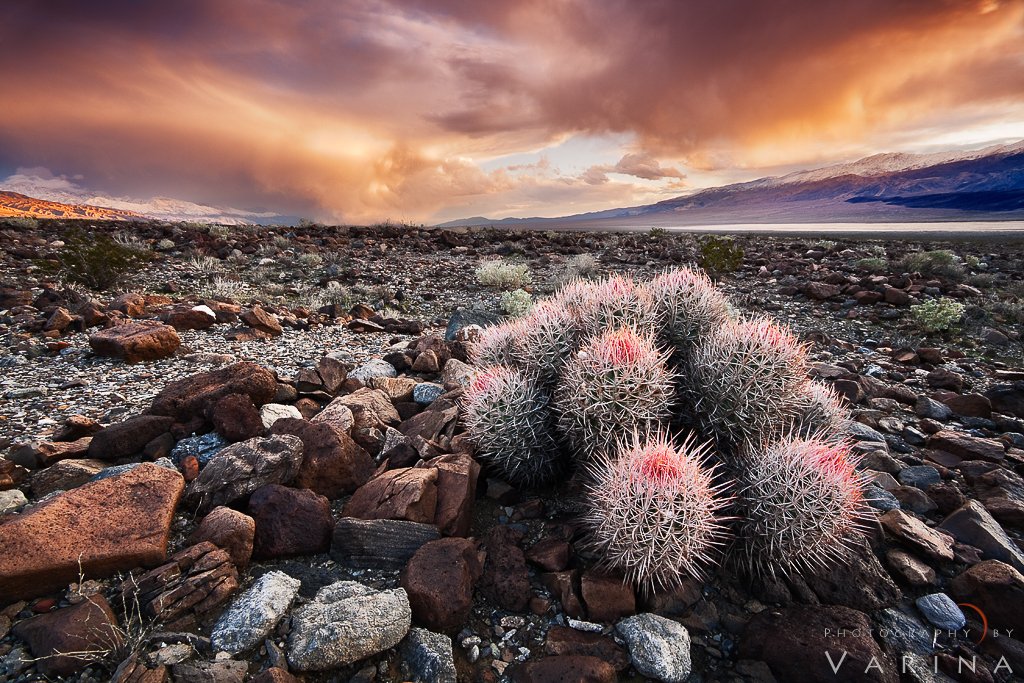
Landscape photography in storms can be a lot of fun, and they offer a perfect opportunity to get creative. Try a long shutter speed to highlight the motion of fast-moving clouds. Use a long lens to “get close” to a distant storm and fill the frame with the storm itself… or use a wide angle lens to make the most of wide-angle distortion as I did here.
-
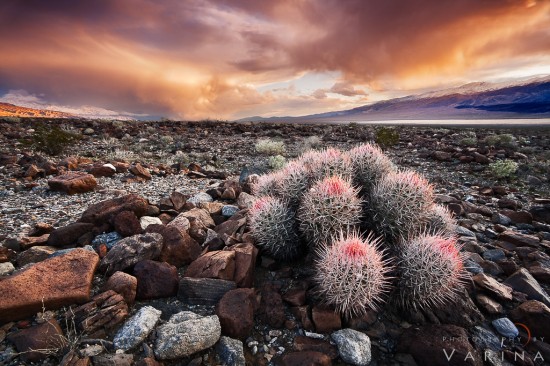
Capturing stormy weather with a wide angle lens in Death Valley, California by Varina Patel
-
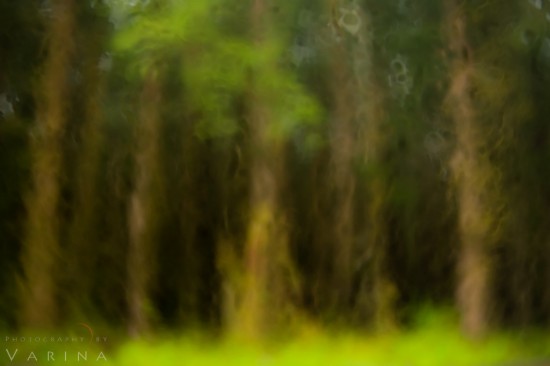
Creative photography during a rainstorm shot through a car window in Hoh Rainforest

Try shooting through a pane of glass to capture rain drops or to create an abstract shot. Look for closeups, too – water droplets make awesome subjects.
Changing weather is amazing
Be sure to stick around after the storm, too. Changing weather can produce spectacular conditions… sunbeams, rainbows, and breathtaking sunrises and sunsets. We often plan our trips to coincide with the best conditions for storms in hopes that we’ll get some really beautiful light. Look for the edge of the storm front and be ready to move as the storm shifts. We like to shoot at the edge of the storm, where clouds are forming or dissipating. Gorgeous!

Landscape photography during a passing storm – Rainbow Falls, Hilo, Hawaii
And when light conditions are changing dont just take one photo….make sure you observe the changing conditions and capture different composition under changing light conditions as demonstrated by Jay in this video:
We’re not suggesting that you should go out and shoot in dangerous weather… PLEASE DON’T! Check with park rangers to find out which areas could be dangerous, and use common sense. (Stay out of crevices and canyons if rain is coming – flash floods can be deadly. If there’s lightening, get yourself indoors or stay in a safe place. And so on.)
Do you hole up and hide when the weather gets nasty? Or do you consider stormy skies to be an ideal landscape photography opportunity?
About Author Varina Patel

There is nothing more remarkable to me than the power of nature. It is both cataclysmic and subtle. Slow and continuous erosion by water and wind can create landscapes every bit as astonishing as those shaped by catastrophic events – and minuscule details can be as breathtaking as grand vistas that stretch from one horizon to the other. Nature is incredibly diverse. Burning desert sands and mossy riverbanks… Brilliant sunbeams and fading alpenglow… Silent snowfall and raging summer storms… Each offers a unique opportunity. I am irresistibly drawn to the challenge of finding my next photograph, and mastering the skills required to capture it effectively.
Visual Wilderness https://ift.tt/2V2B50Q
Sourced by Time Trap Photography sharing the best photography tips, news and tricks throughout the industry. Time Trap Photography is dedicated to freezing those special moments in life that can be revisited and admired for generations to come. - Shannon Bourque
Please visit our main site for booking availability and rates.

Receive valuable industry knowledge delivered free to your email each day.



No comments:
Post a Comment
Thank you so much for your comment. A moderator will review and approve all relevant posts. We appreciate your support and encourage you to stay with us by subscribing to our email updates. Where you can easily pick and choose what photography subjects interests you. Subscription link: http://bit.ly/photo-sub