
Let’s face it… all landscape photographers want to capture sharp photos. However, getting everything in sharp focus is an issue that many of us struggle with. We often get questions like the following about getting everything sharply in focus:
“I’ve noticed that when I look at some of my photos, they seem to be in focus – but when I zoom in to take a closer look, they aren’t. What can I do?”
Like all other beginner landscape photographers, I struggled at first to get the sharp focus. So how did I discover the proper focusing techniques?
How I Learned to Get Sharp Focus
The story begins in Washington’s beautiful Olympic National Park. I was new to photography and was trying to shoot a gorgeous cascade in the Sol Duc Falls area. But I was having trouble getting a sharp image.

Out of focus nature photo, Olympic National Park, WA
Some shots would turn out great, but many of them looked like the image you see above. I knew I wanted to get close to the foreground moss, but I didn’t know where exactly to set my focus or which camera settings would help me to get the most important parts of the scene tack-sharp. Despite the fact that I tried using different focal lengths, nothing seemed to help. I understood the principles and math behind the concept of hyperfocal distance in theory, but had no idea how to apply those principles in the field.
Over the next six months, I studied and practiced until I mastered the concept of hyperfocal distance. I took all of the theoretical information and applied my practical experience to it, developing an easy, five-step workflow that allows me to get sharp focus on my subject every time.

In sharp focus landscape photo, Olympic National Park, Washington
When I returned to that same spot in Olympic National Park, I had no trouble getting close to my subject AND getting everything sharply in focus. My camera was only inches away from the trillium flower in the above image, but I knew exactly where to focus and what focal length to use to highlight all the beautiful details of the scene.
There are various reasons why you might have problems getting sharp focus in your photos. Getting the right focus requires you to think through the problem and then choose the correct focus settings and the right focusing strategy. Let’s take a look at some typical focusing situations found in nature.
Photographing Birds in Flight

Continuous focus settings – Grimsey Island, Iceland
When we are talking about capturing images of birds in flight, we are typically using a long lens (200mm or longer) to capture them. Focusing with a long lens is very critical because a tiny amount of focus adjustment can make your image blurry. In order to track the birds, I set my camera in continuous tracking mode and picked the widest possible focusing zone. This allows my camera to use ALL available focusing points to track the bird as it moves across the sensor.
Shooting a Moving Gecko in Hawaii
The motion of a gecko is not quite the same as the motion of birds in flight. A gecko’s motion is unpredictable. There are times when it sits perfectly still and other times when it’s on the move. This makes focusing more challenging then with flying birds. Here is how I ended up focusing on the gecko…
Capturing everything in Sharp Focus
When my subject is static with a close foreground element, I use the Hyperfocal Distance Workflow to focus. This allows me to get everything sharply in focus, but requires me to focus at a specific distance. In the following landscape photo from Death Valley National Park, Varina used a single focusing point and live view to set her focusing point exactly where she wanted it to be.

Landscape photo captured using hyperfocal distance – Death Valley, California
It is important to understand that focus setting is just one of many variables that impacts sharpness of your landscape photos. Besides choosing the right focus setting, you also need to pay attention to the subject motion, camera motion, depth of field, and more.
Besides focus modes and settings on your camera, here are a few more practical tips that landscape photographers should follow to get sharp photos:
- Always use a tripod. You don’t need anything fancy – just something that keeps your camera nice and steady when you are shooting.
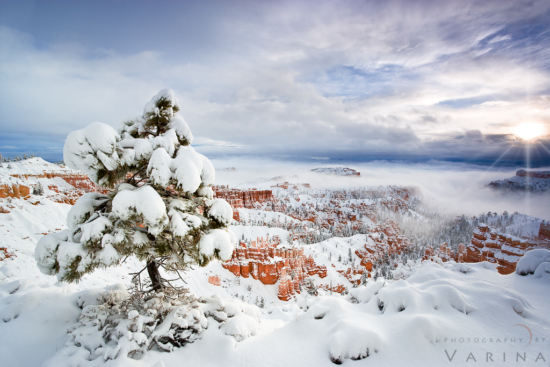
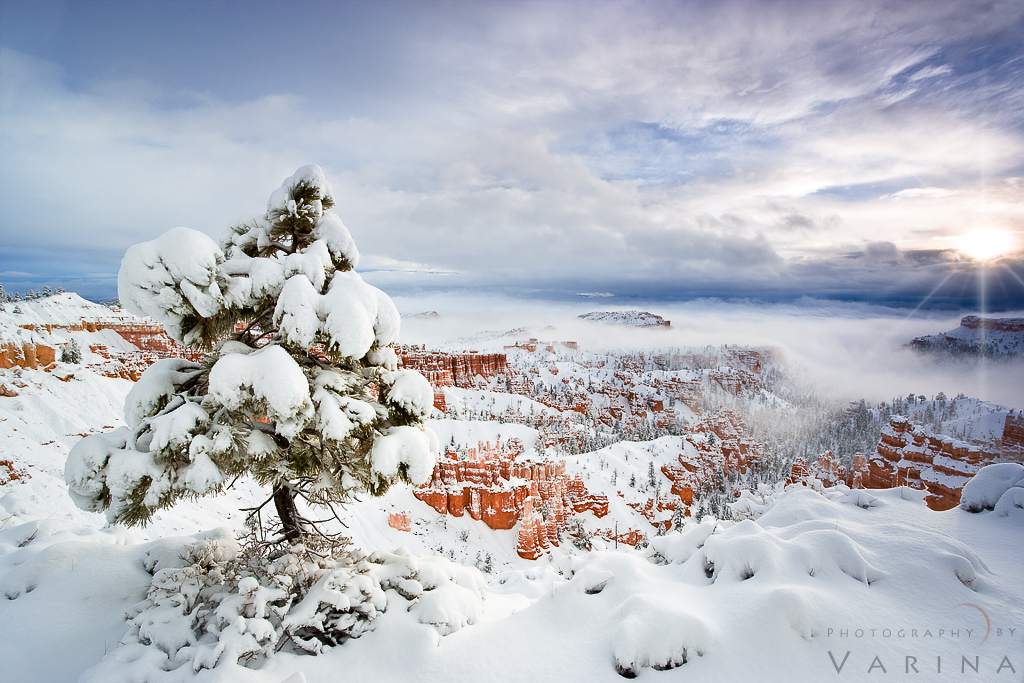
Foreground & Background in sharp focus in Bryce Canyon
- Try using a remote release so you don’t have to touch your camera as you release the shutter. If you don’t have a timed release, most digital cameras have a two-second delay that waits two seconds after you push the shutter release in order to minimize camera shake. You just press the shutter and then take your hand away. Two seconds later, the camera takes the picture. If you are using a DSLR, you can select the “mirror lockup” setting as well. When you release the shutter, the mirror inside the camera pops up, the camera pauses for two seconds, and then it takes the photo.
- Try setting your auto focus and then switching to manual focus. The idea is to get your focus just right and then switch out of auto-mode. Many cameras automatically adjust focus when you depress the shutter button part-way. Sometimes, landscape photographers set the focus on their subject and then shift their composition before releasing the shutter. That’s a good way to focus on something that isn’t in the middle of the frame. But if you don’t want to accidentally change your focus, you must make sure you turn off the auto focus option after focusing. Of course, many cameras have multiple focus points, so it’s often possible to focus on a specific point within your composition simply by choosing the right focusing point.

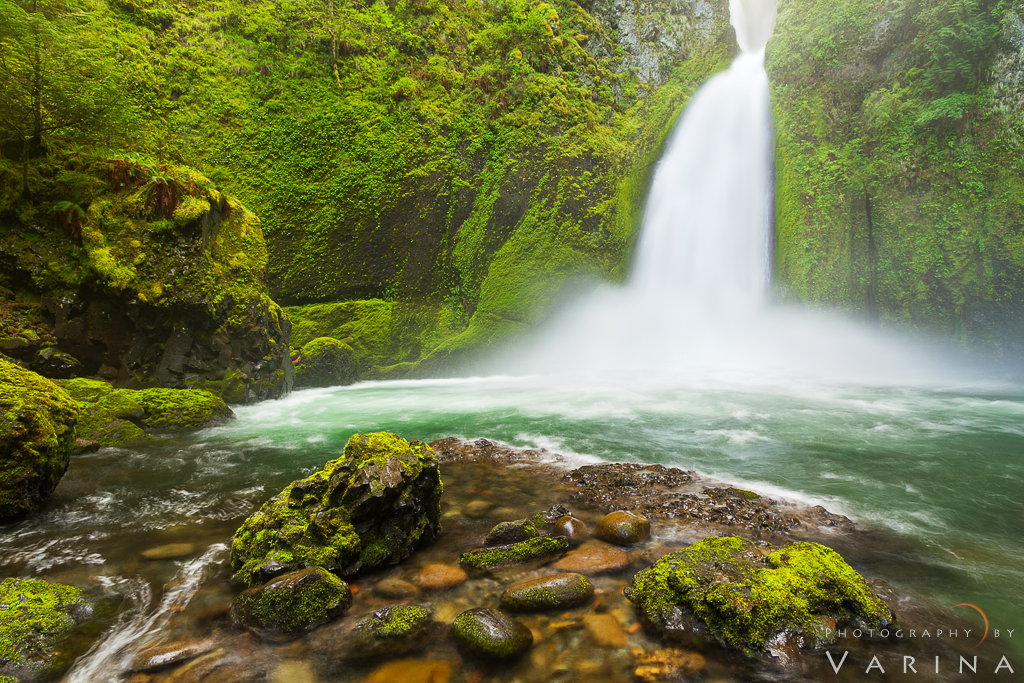
Columbia River Gorge, Oregon
- Pay attention to your Depth of Field. The wider your aperture, the narrower your depth of field will be. If the point where you focused is sharp but things that are further away or closer aren’t, then you need a narrower aperture. You can also back up a little and see if you can get a better focus.
- Your camera can’t focus in the dark – so if you are trying to focus during sunset, you might have problems. Try using a flashlight to light something in your scene so you can focus on it. Then turn the flashlight off before you take the shot.
As you can see, getting everything sharply in focus for landscape photography is about so much more than just knowing how your camera works. Getting really sharp images can be a challenge, but you can make it happen with a little knowledge and practice. Our In Sharp Focus and Hperfocal Distance tutorials offers a solid focusing workflow that highlights technical knowledge and encourages creativity. Filmed on the beautiful Big Island of Hawaii, this course is specifically designed with landscape photographers in mind.
About Author Jay Patel

I could startoff like this – “Seeds of Jay Patel’s appreciation for beautiful places were planted early in his childhood….” but it would get boring really fast. I will just sum it up and say that I am a Landscape and Wilderness Photographer who loves to capture dramatic light. My photographs have been published in various magazines, calendars and advertising materials throughout the world.
Patience is a virtue...unless you are chasing your dreams
Visual Wilderness https://ift.tt/340Csjv
Sourced by Time Trap Photography sharing the best photography tips, news and tricks throughout the industry. Time Trap Photography is dedicated to freezing those special moments in life that can be revisited and admired for generations to come. - Shannon Bourque
Please visit our main site for booking availability and rates.

Receive valuable industry knowledge delivered free to your email each day.



No comments:
Post a Comment
Thank you so much for your comment. A moderator will review and approve all relevant posts. We appreciate your support and encourage you to stay with us by subscribing to our email updates. Where you can easily pick and choose what photography subjects interests you. Subscription link: http://bit.ly/photo-sub